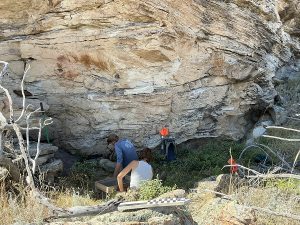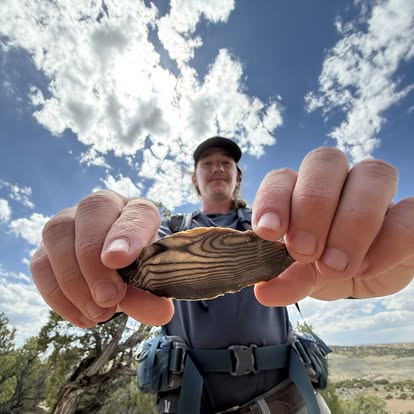
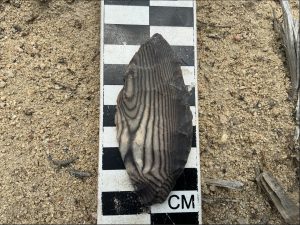
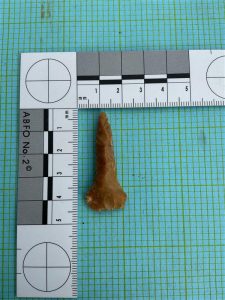
During a recent Class III cultural resource survey, archaeologists with Grouse Mountain Environmental Consultants uncovered a remarkable piece of prehistory: a finely crafted projectile point made from Bridger Chert, also commonly known as tiger chert.
A Tool With a Long Journey and an Even Longer History
Bridger Chert is not locally sourced. Geological analysis indicates the material originated nearly 100 kilometers (62 miles) from where the tool was ultimately deposited. This distance provides valuable insight into early travel routes, trade networks, and mobility patterns of prehistoric peoples.
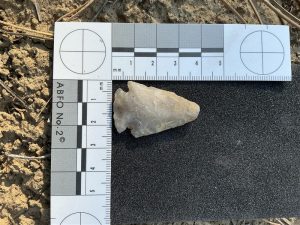
Based on its physical characteristics, the artifact was identified as a Paleoindian projectile point, dating back approximately 8,000 to 10,000 years ago. Discoveries from this time period are uncommon, making this find especially significant from both a scientific and cultural perspective.
What a Class III Survey Can Reveal
This discovery occurred during a Class III cultural resource survey, the most intensive level of archaeological investigation required for many projects with a federal component. These surveys involve systematic pedestrian coverage and subsurface evaluation to identify and document cultural resources prior to ground-disturbing activities.
Class III surveys are a critical part of compliance for projects subject to federal regulations and agency review, including coordination with entities such as the Bureau of Land Management and other permitting authorities.
Supporting Projects From Discovery Through Completion
Projects with a federal nexus often require extensive documentation, reporting, and agency coordination when significant cultural resources are identified. Grouse Mountain’s archaeology team not only locates and documents artifacts like this Paleoindian projectile point, but also manages the associated reporting and permitting documentation needed to ensure projects remain compliant and on schedule.
From discovery through final clearance, our team works closely with clients and agencies to protect cultural resources while supporting successful project completion.
 .
.  .
.