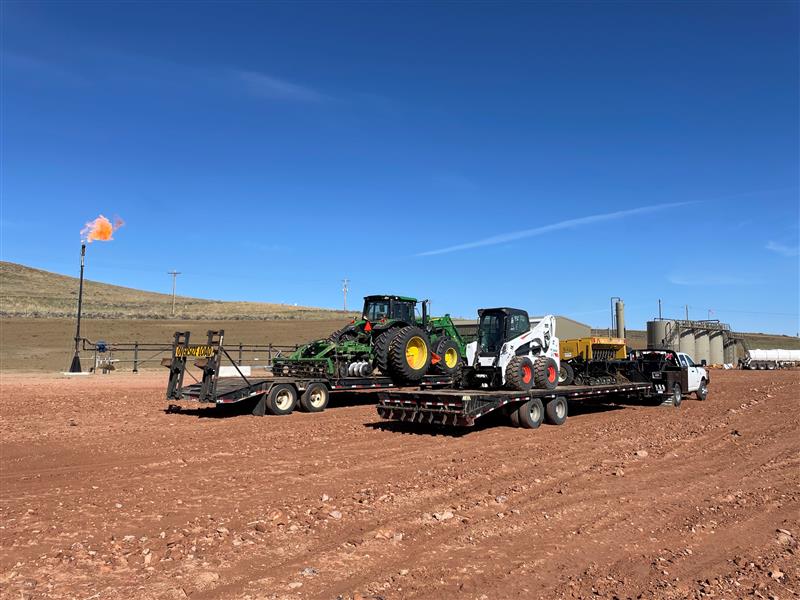
In the arid landscapes of the West, topsoil isn’t just dirt, it’s a biological bank account. Once it’s lost or degraded, the “interest” (vegetation) stops growing, and reclamation costs skyrocket. For any energy or infrastructure project, the difference between a successful close-out and a failed site often comes down to how you handle the first few inches of earth.
At Grouse Mountain Environmental Consultants, we treat Topsoil Management as a precision science. By focusing on salvage, testing, and strategic placement, we ensure your project preserves the nutrients and microorganisms necessary for long-term site stability.
Salvage and Segregation: Preserving the “Seed Bank”
The best seed mix in the world can’t compete with the native seed bank already present in your site’s topsoil. Our approach starts with careful salvage and segregation protocols:
-
Strategic Stripping: We identify and separate the nutrient-rich topsoil layer from the sterile subsoil during initial disturbance.
-
Smart Stockpiling: We design stockpiles to minimize compaction and maintain aerobic conditions, keeping the “living” part of the soil alive while it waits for redistribution.
-
Contamination Prevention: Clear segregation ensures that subsoil salts or rocks don’t mix with your high-quality growth medium.
Data-Driven Placement: Testing and Amendments
“Spreading the dirt back out” is only half the battle. To ensure vegetation takes hold, we use soil stability analysis and testing to guide our placement planning:
-
Soil Testing: We analyze pH, salinity, and nutrient levels to understand exactly what the soil needs to succeed.
-
Amendment Optimization: Instead of guessing, we use data to recommend the precise amount of organic matter, mulch, or fertilizer needed to jumpstart the ecosystem.
-
Placement Planning: We calculate exact depths and distribution patterns to ensure the landscape is stable and ready for seeding, even on challenging slopes.
Why Topsoil Management & Strategic Redistribution Matters
Poor topsoil management leads to erosion, invasive species, and repeated seeding attempts. By investing in a strategic redistribution plan, you:
-
Speed Up Bond Release: Healthy soil grows native plants faster, meeting agency requirements sooner.
-
Reduce Erosion Risk: Stable, well-placed soil stays where it’s put, protecting nearby watersheds and infrastructure.
-
Lower Long-Term Costs: It is much cheaper to manage topsoil correctly the first time than to haul in “clean fill” or re-seed a failed site.
The GMEC Difference
Our reclamation teams work hand-in-hand with our field biologists to ensure that the soil we manage today is ready to support the wildlife habitat of tomorrow. We don’t just move earth; we manage the foundation of your project’s success.
Ready to ensure your project’s compliance?

