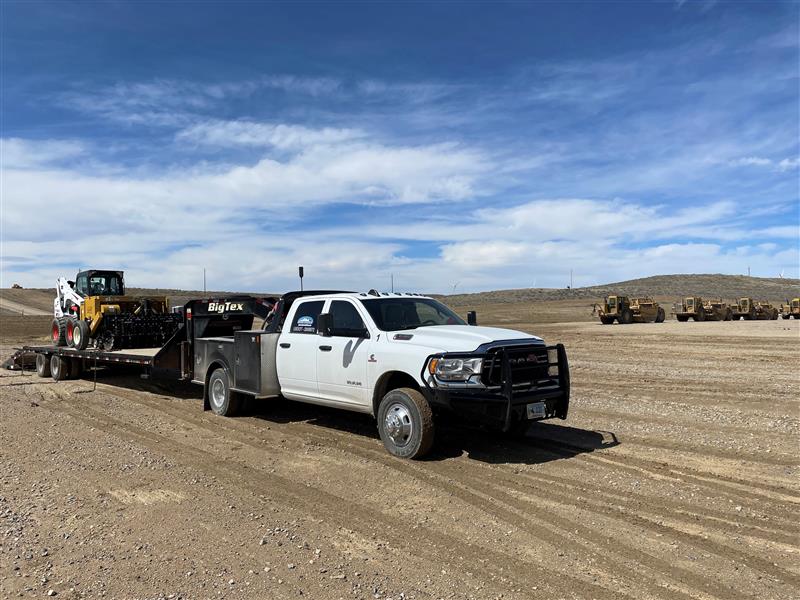
In the Mountain West, the construction of a wind or solar farm is a massive undertaking that fundamentally alters the earth. Miles of access roads, expansive turbine pads, and thousands of solar piles create a significant “footprint” of disturbance. However, in the eyes of state and federal regulators, a project isn’t truly complete until the land is stable, the native grasses return, and the risk of erosion is mitigated.
At Grouse Mountain Environmental Consultants, we specialize in Reclamation and Land-Disturbance Planning. We bridge the gap between heavy construction and long-term ecological stability, ensuring your renewable energy project meets its permit obligations while protecting the integrity of the local environment.
The Foundation: Custom Seed-Mix Development
Reclamation in Wyoming and the surrounding states is not a “one-size-fits-all” process. A seed mix that thrives in the Red Desert will fail in the high alpine forests or the shortgrass prairie. We provide site-specific botanical expertise to ensure successful revegetation:
-
Native Species Selection: We design custom seed mixes based on pre-disturbance vegetation surveys, ensuring that only resilient, site-adapted native species are used.
-
Soil Compatibility: We analyze soil chemistry and texture to match seeds with the specific moisture-holding capacity and nutrient levels of your project site.
-
Pollinator & Wildlife Focus: Where required by agencies or landowners, we integrate flowering forbs and shrubs to support local pollinator health and big game winter range.
Holding the Ground: Soil Stabilization & Erosion BMPs
Until vegetation is established, disturbed soil is highly vulnerable to the West’s intense wind and seasonal runoff. We develop comprehensive Best Management Practices (BMPs) to keep your soil where it belongs:
-
Erosion & Sediment Control: From silt fences and straw wattles to advanced tackifiers and erosion control blankets, we design the physical barriers needed to prevent off-site sediment migration.
-
Topsoil Management: We provide guidance on the correct stripping, stockpiling, and re-application of topsoil, the most valuable biological asset on your project site.
-
Compaction Relief: Our reclamation plans include specific mechanical techniques to alleviate soil compaction from heavy equipment, allowing new root systems to penetrate and thrive.
Tailored Site Reclamation Plans
A robust Reclamation Plan is often a mandatory component of a BLM Plan of Development (POD) or a state industrial siting permit. We provide the technical documentation needed for approval:
-
Performance Standards: We define clear, measurable benchmarks for success (e.g., “70% of baseline cover”) so you know exactly when your reclamation bond can be released.
-
Monitoring & Maintenance: We develop long-term schedules for weed control and supplemental seeding to ensure the site remains on a trajectory toward full restoration.
-
Visual Impact Mitigation: For solar and wind projects near sensitive viewsheds, we design reclamation strategies that help the facility blend back into the natural horizon.
Why Professional Reclamation Planning is a Business Asset
In the renewable sector, reclamation is the “exit strategy” for your financial liability. By partnering with GMEC, you gain:
-
Bond Release Efficiency: Successful first-year growth means faster bond releases, freeing up capital for your next project.
-
Reduced O&M Costs: Stabilized soil prevents road washouts and infrastructure undermining, reducing the need for costly post-construction repairs.
-
Regulatory Compliance: Our plans meet the strict standards of the WDEQ, BLM, and State Land Boards, protecting you from non-compliance fines and “stop-work” orders.
The GMEC Difference
We are “boots-on-the-ground” consultants who understand the harsh growing conditions of the West. Our team combines technical soil science with a practical understanding of the energy industry’s operational timelines. We don’t just plan for the disturbance; we plan for the restoration.
Ready to ensure your project’s compliance?

