Grouse Mountain Biologists Participate in Christmas Bird Counts Across Three States

Each winter, biologists and bird enthusiasts across North America head into the field for the annual Christmas Bird Count (CBC). This long-standing community science effort provides invaluable data that helps researchers understand bird populations, migration patterns, and long-term environmental change.

At Grouse Mountain Environmental Consultants, participation in efforts like the Christmas Bird Count reflects both our professional expertise and our passion for conservation.

Fieldwork Across Wyoming, New Mexico, and Texas

During December and January, Grouse Mountain biologists participated in three Christmas Bird Counts across three states, contributing hundreds of observations to this important dataset.

    • Wyoming
      32 species observed
      1,627 individual birds counted


    • New Mexico
      27 species observed
      239 individual birds counted


    • Texas
      53 species observed
      393 individual birds counted
Across all three counts, our team documented 84 unique species and 2,259 individual birds. Each observation helps build a clearer picture of regional biodiversity and ecosystem health.

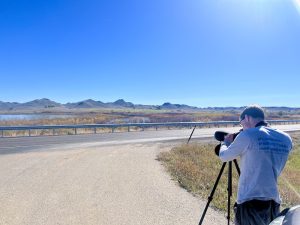
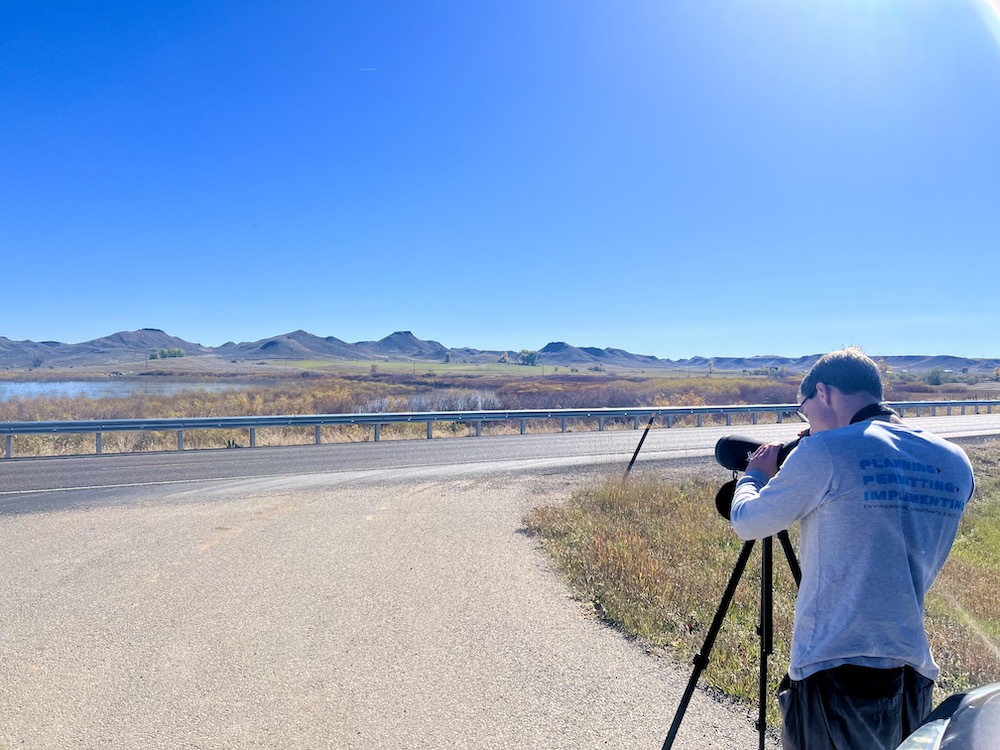
Noah using a spotting scope at the Clear Creek
Diversion Dam while birding on his lunch break

Using Data to Support Better Environmental Decisions

Beyond organized counts like the CBC, Grouse Mountain biologists regularly contribute bird observations to eBird, a global platform that allows scientists, agencies, and conservation organizations to access real-time bird data.

In 2025, Grouse Mountain biologists recorded bird observations across:
    • 5 countries
    • 10 U.S. states
    • 316 unique species identified
These observations are often collected during recreational birding trips, local surveys, and travel throughout the year. While informal, this consistent data collection plays an important role in long-term ecological research and reinforces our data-driven approach to environmental consulting.

A Commitment That Extends Beyond the Job

For our team, conservation is not confined to project boundaries or office hours. Participation in citizen science efforts reflects a deeper commitment to understanding and protecting the landscapes and wildlife we work with every day.

As we look ahead to 2026, our biologists are excited to continue exploring new regions, documenting new species, and contributing meaningful data that supports sound environmental planning and stewardship.

European Robin observed in              
Giardino di Boboli in Italy
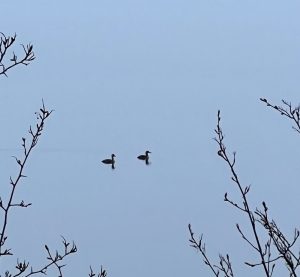
Red-necked Grebes swimming
in Seeley Lake, Montana
Hooded Crows were a common
sight in Italy                         

A Rare Paleoindian Discovery Unearthed During a Cultural Resource Survey

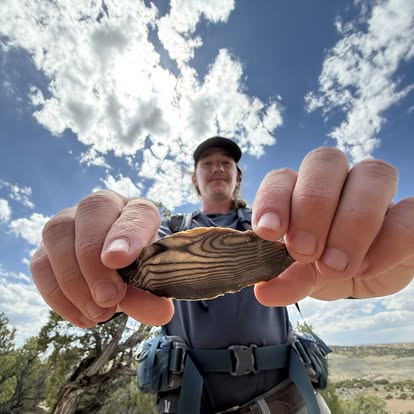
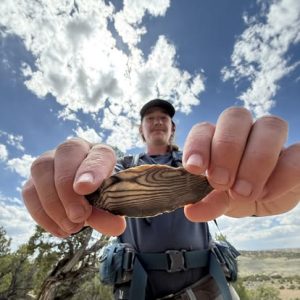
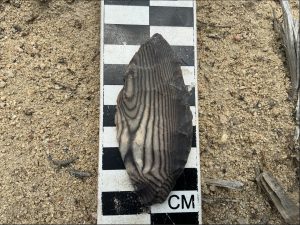
During a recent Class III cultural resource survey, archaeologists with Grouse Mountain Environmental Consultants uncovered a remarkable piece of prehistory: a finely crafted projectile point made from Bridger Chert, also commonly known as tiger chert.

A Tool With a Long Journey and an Even Longer History

Bridger Chert is not locally sourced. Geological analysis indicates the material originated nearly 100 kilometers (62 miles) from where the tool was ultimately deposited. This distance provides valuable insight into early travel routes, trade networks, and mobility patterns of prehistoric peoples.

Based on its physical characteristics, the artifact was identified as a Paleoindian projectile point, dating back approximately 8,000 to 10,000 years ago. Discoveries from this time period are uncommon, making this find especially significant from both a scientific and cultural perspective.

Finds like this help archaeologists better understand early human occupation, lithic tool production, and how ancient populations interacted with the landscape over thousands of years.

What a Class III Survey Can Reveal

This discovery occurred during a Class III cultural resource survey, the most intensive level of archaeological investigation required for many projects with a federal component. These surveys involve systematic pedestrian coverage and subsurface evaluation to identify and document cultural resources prior to ground-disturbing activities.

Class III surveys are a critical part of compliance for projects subject to federal regulations and agency review, including coordination with entities such as the Bureau of Land Management and other permitting authorities.


Supporting Projects From Discovery Through Completion

Projects with a federal nexus often require extensive documentation, reporting, and agency coordination when significant cultural resources are identified. Grouse Mountain’s archaeology team not only locates and documents artifacts like this Paleoindian projectile point, but also manages the associated reporting and permitting documentation needed to ensure projects remain compliant and on schedule.

From discovery through final clearance, our team works closely with clients and agencies to protect cultural resources while supporting successful project completion.

If your project includes a federal component, our experienced archaeologists would love the opportunity to help uncover the past while keeping your project moving forward.

GET IN TOUCH

You can find us in the office weekdays from 8am-5pm or call anytime.

P: 307.684.2112

Grouse Mountain Headquarters

760 West Fetterman Street
Buffalo, WY 82834

Grouse Mountain New Mexico

3600 Cerrillos Rd, Ste 407
Santa Fe, NM 87507

Send us a message or inquire on your next project.

  • This field is for validation purposes and should be left unchanged.